- PrivateEquityGuy
- Posts
- The initial 6x EBITDA multiple turned into 3.9x (not because the business wasn't any good but because there weren’t many buyers...).
The initial 6x EBITDA multiple turned into 3.9x (not because the business wasn't any good but because there weren’t many buyers...).
This led to an opportunity where this 30-something-year-old was able to raise $25 million from a previous boss

PrivateEquityGuy
December 29, 2025
Hey Friend, Company Builder, and Fellow Capital allocator,
2026 is almost here. I hope you’ve had time to read, think and you feel excited about what is to come.
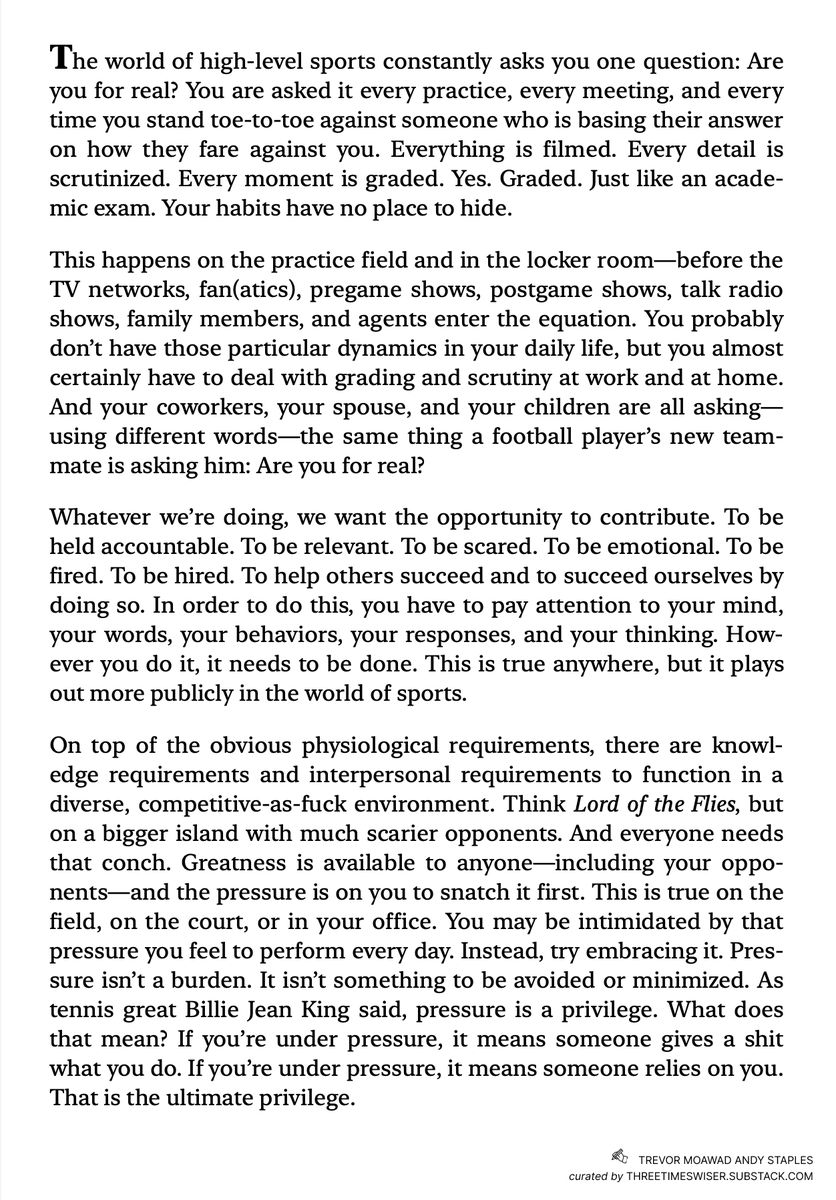
As the following letter on Pressure says:
Greatness is available to anyone – including your opponents – and the pressure is on you to snatch it first. This is true on the field, on the court, or in your office.
You may be intimidated by that pressure you feel to perform every day… Instead, try to embrace it.
If you’re under pressure, it means someone relies on you and that is the ultimate privilege!
- - - -
Over the last few days, I went through a list of traditional businesses with EBITDA between $500K and $5M.
A few observations stood out:
Companies in this EBITDA range can have anywhere from $2M to $50M in revenue. Margins vary massively by industry. Obvious in theory - but powerful to see in practice.
Not all owners are cash-rich. Many businesses sit on large asset bases, yet most of the cash is continuously reinvested just to keep operations running.
Roughly 95% of founders are over 40 years old. A good reminder that meaningful success usually takes time.
Some companies are extremely asset-light. They distribute most of their earnings as dividends, change very little year to year, and look almost identical next year to last.
The sheer number of services, products, and niches is staggering. It almost feels unreal. For example, a well-drilling business can generate 25–30% net margins year after year, like clockwork, and has done so since 2008.
Solo ownership is relatively rare. Many businesses have multiple owners, which creates optionality - often one partner may be open to selling their stake. A quiet but real opportunity for the right buyer.
-
Which leads me to raising capital, one lesson after talking to many buyers:
You can take 'dumb money' and keep more equity…
Or you take 'smart money' from experienced operators, searchers, marketers and simply build a firm with better returns.
Smart money might cost you a few extra points, but it’s cheap insurance on the downside and a strategic edge on the upside.
- - - -
One last Christmas present (from our sponsor)…
If you’re running a company, a holding company, or an investment firm… and you’ve been thinking, “I should be writing a newsletter to attract clients, investors, talent… and opportunities”… but you don’t have the time to research, write, publish, or grow it, this is for you.
This is where today’s sponsor, Spacebar Studios, comes in.
This December, they’re doing something totally new:
They’ll build your entire newsletter strategy, your systems, and your content foundations.
They’re only opening this to TWO companies, and it will go fast.
If you want 2026 to start with momentum, talk to Spacebar Studios here.

- - - -
There’s a gentleman in the art industry whom I keep studying. His name is Larry Gagosian, the mega-gallery industrialist.
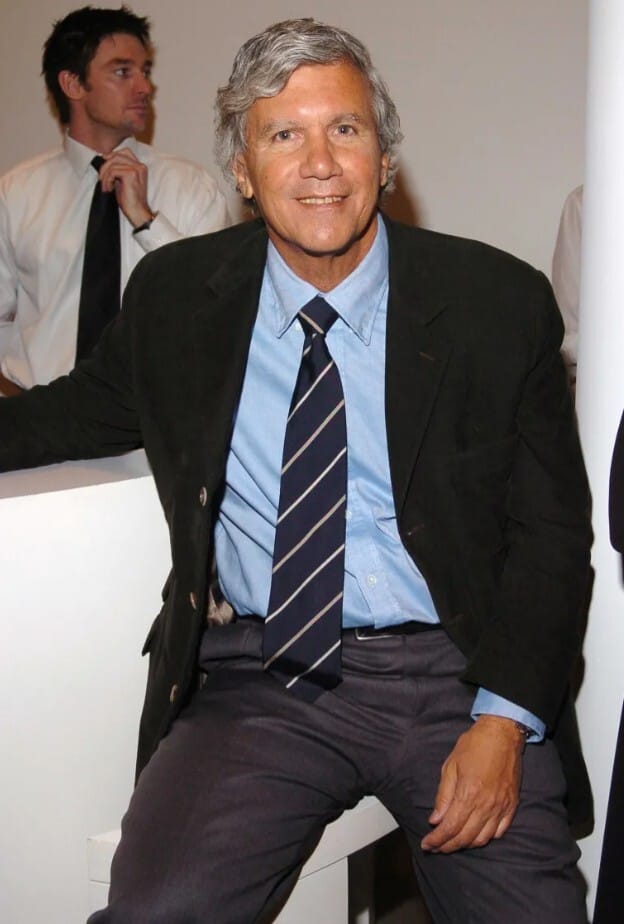
I really believe his VERY clear and actionable toolkit is something you can copy when building, acquiring, and running companies.
(I have to warn you, though: this toolkit is VERY dangerous in the hands of your competitors.)
For example, he teaches how he builds proprietary deal flow by focusing on the secondary market (again, all explained in the research). A few lessons and takeaways (save for later if busy now):
1. Make the market; don’t wait for an invitation.
2. Pick up the phone 100 times a day and map the territory until you are the territory.
3. Build a private index of your niche, know who owns what, who’s aging out, who’s hungry, then move.
4. Operate in validated markets, less romance, more cash flow.
5. Price with information, not hope; asymmetry is your profit.
6. Control compounds; dilution is a tax on your future self. 7. Reinvest relentlessly into brand, distribution, and access.
8. Own your distribution so you can name your price.
9. Manufacture scarcity and status so demand chases you.
10. Treat relationships as infrastructure, not decoration.
11. Track heirs and successors because tomorrow’s deal starts years before it closes.
12. Host rooms that concentrate your market: parties are just sales events with better lighting.
13. Think in decades; compounding needs time and uninterrupted control.
14. Keep a 50-asset hit list and call five owners every day, especially the ones who “aren’t selling”.
15. Keep majority control: golden shares, buybacks, terms that protect the mission.
16. Measure speed like a KPI: days from first contact to LOI is a P&L line item.
17. Avoid analysis paralysis; decisions beat perfect plans.
18. Chase leverage, not prestige; the secondary market is where adults get rich.
19. Never trade long-term control for short-term capital.
20. Refuse to be transactional; follow up when there’s nothing to gain yet.
21. Be the index in an opaque market so everyone has to call you first.
22. Start lean, grow on revenue, keep the cap table clean.
23. Roll up fragmented, boring niches and become the default buyer.
24. Build a flywheel of trust, scarcity, and distribution control.
25. Play a 40-year game, quiet, relentless, impossible to dislodge.
An episode I recorded on him (links to: Apple podcasts, Spotify, YouTube):
How Larry Gagosian built a $1B+ business - without outside capital and without ever selling control (still owns 100% of the firm)
I beileve this model mirrors the best HoldCos, PE firms, and capital allocators - even though it looks nothing like finance.
- - - -
“Deal-flow… deal-flow… deal-flow… I’d like to see more quality deals,” is something I keep hearing when talking to investors and company buyers. That is why I partnered with CapitalPad some time ago.
They connect acquisition entrepreneurs with accredited investors interested in small business and lower middle-market private equity deals.
The platform standardizes everything that’s usually fragmented, deal rooms, structures, terms, and distributions, giving investors access to well-structured opportunities and sponsors the capital they need to close.
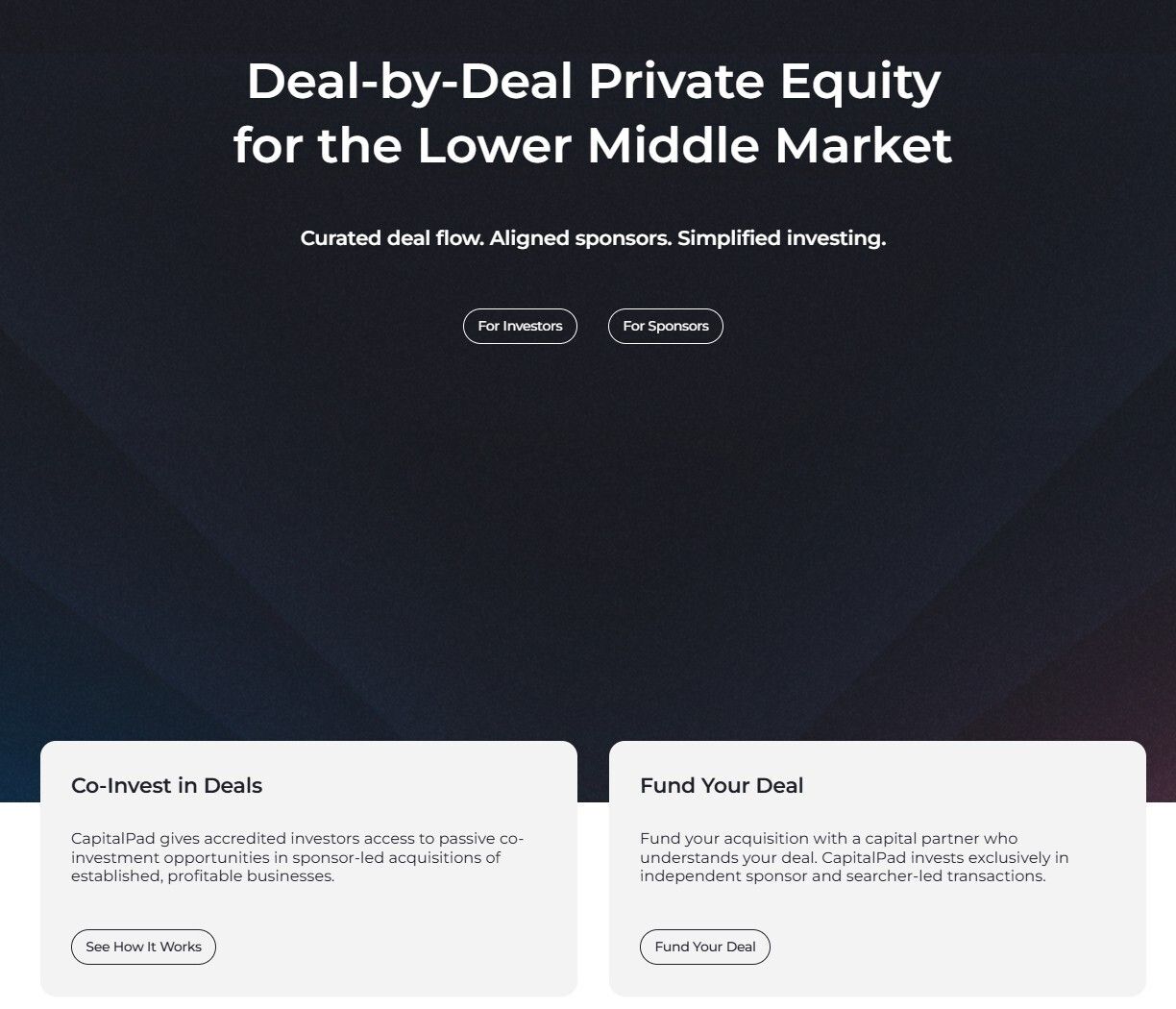
Learn more at CapitalPad.com
Data shows thousands of investors have gone to visit their page. People really love deal-by-deal private equity.
- - - -
If you work for a family office or just a HNWI and you've done a wonderful job allocating their capital across various asset classes:
fixed income, real estate, public equities, PE, venture capital, private credit, commodities, and traditional niche businesses... a bit of everything.
Read this.
If you actually have the desire to build something for yourself, I encourage you to try raising capital from this same family or individual. I spoke to someone who did exactly that.
He is in his early 30s, and his 20s were spent working for a wealthy family. He did everything I mentioned above. He did it VERY well... but felt he wanted to build something for himself. What did he do? He went and pitched his boss to invest in his venture so he could start acquiring traditional $1-3M EBITDA companies.
The family ended up investing ca $25 million. He’s about to close his very first acquisition in the next 60 days, and then two more right after that.
What a guy. What a desire. What an execution. The power of free enterprise and pure desire to live an awesome life deploying capital in traditional niche businesses.
The best part: he is doing that in an area with not many buyers, so the initial approach to a seller was followed by a 6x EBITDA multiple expectation... which today has changed a lot... the term sheet is signed at 3.9x EBITDA. The seller is older, with no succession plan, as the kids are not interested.
-
If you think about this from a family office point of view...
What a better way to allocate a portion of your capital to directs? Do you want exposure to the asset class, space? Do you believe in and want to back that entrepreneur?
You get to incubate and train a guy before he takes risks on his own, with your guardrails, capital, and family business support/connections, to have a lift out of the gates, eliminating any cold start problem.
For the young aspiring entrepreneur playing the long game and building the trust of the family, do your very best to set expectations and align incentives in addition to capital + time commitment.
FOs can change their self-prescribed mandate one day to the next and all FOs are not created equal. Additional best case? Search for deals in waters where the family has a brand name, reputation, and rolodex to help get you started.
- - - -
In this week’s podcast I had the person investors, company buyers and operators call when growth starts getting expensive, messy, or fragile... John Seiffer.
John has spent decades across manufacturing, software, restaurants, chemicals, and professional services, and he sees the same pattern over and over:
Founders are great at the product and the sale… but the company can’t scale until the structure scales.

Here are the links to Apple podcasts, Spotify and YouTube.
That’s all for today.
Thanks a lot for reading and I’ll talk to you again very soon.
Take care,
PrivateEquityGuy / Mike Markus